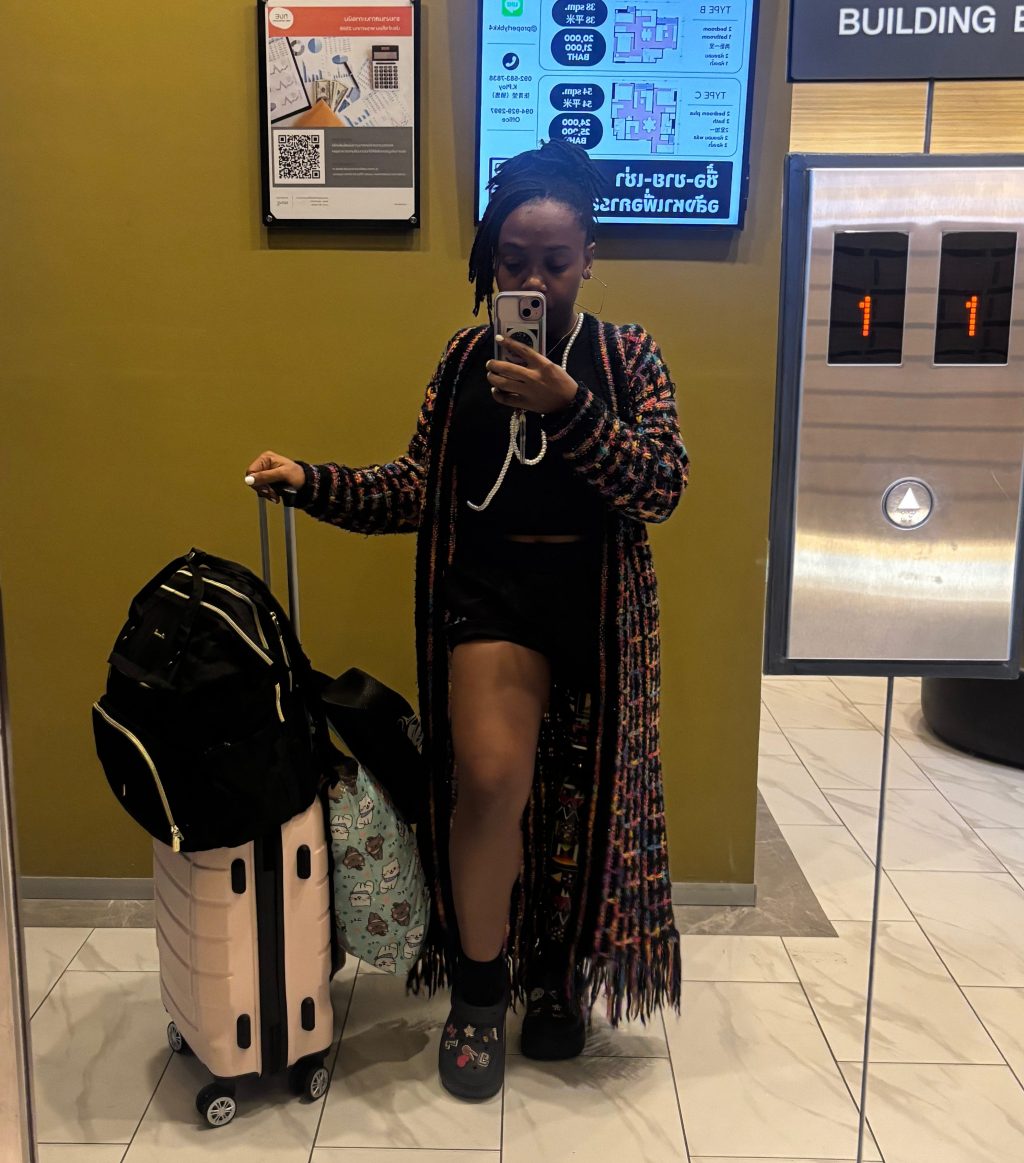
The number one rule when you have a disability is: “Know how to ask for help.”
It’s literally the first thing our parents teach us. And while that still rings true in most parts of daily life, it’s not always the case when you’re traveling with a disability.
Sure, if you’re in immediate danger, ask for help. Absolutely.
But depending on where you are — what resources exist, how people understand disability — you never want to find yourself asking for help… when help either isn’t provided or isn’t even understood.
If you saw my recent post on Instagram (justabenaa_) , then you already know:
My first rule for traveling with a disability is: ADVOCATE for yourself.
This isn’t just about the disability space — it’s for every space. Learn how to advocate for yourself and for your community. It’s something I care about deeply.
But advocacy isn’t the only rule that fights for first place. It’s more like Rule 1b.
Because 1a is: Know your disability like the back of your hand.
Another one that goes without saying — until it doesn’t. Because every time you travel, your “access” to the things that keep your quality of life going changes.
Imagine going to a new country and running out of medication. Or — shoutout to my friends from last week’s post — running out of contacts.
What will you do?
Back in 2023, I went to Kokrobite Beach, Ghana with a friend and a small group of ladies.
For those who don’t know: I love water. It’s my element — the only space where I truly feel connected. And Ghana has some gorgeous beaches, if you know where to find them. Kokrobite, in my opinion, holds a few of the best.
One morning, all of us ladies walked over to this restaurant right on the beach.
It was so close to the ocean, you could still feel the crisp breeze coming in. The water was calling me — I had to go down and see it.
Now, this is where I remind you: Know Your Disability — Rule 1a.
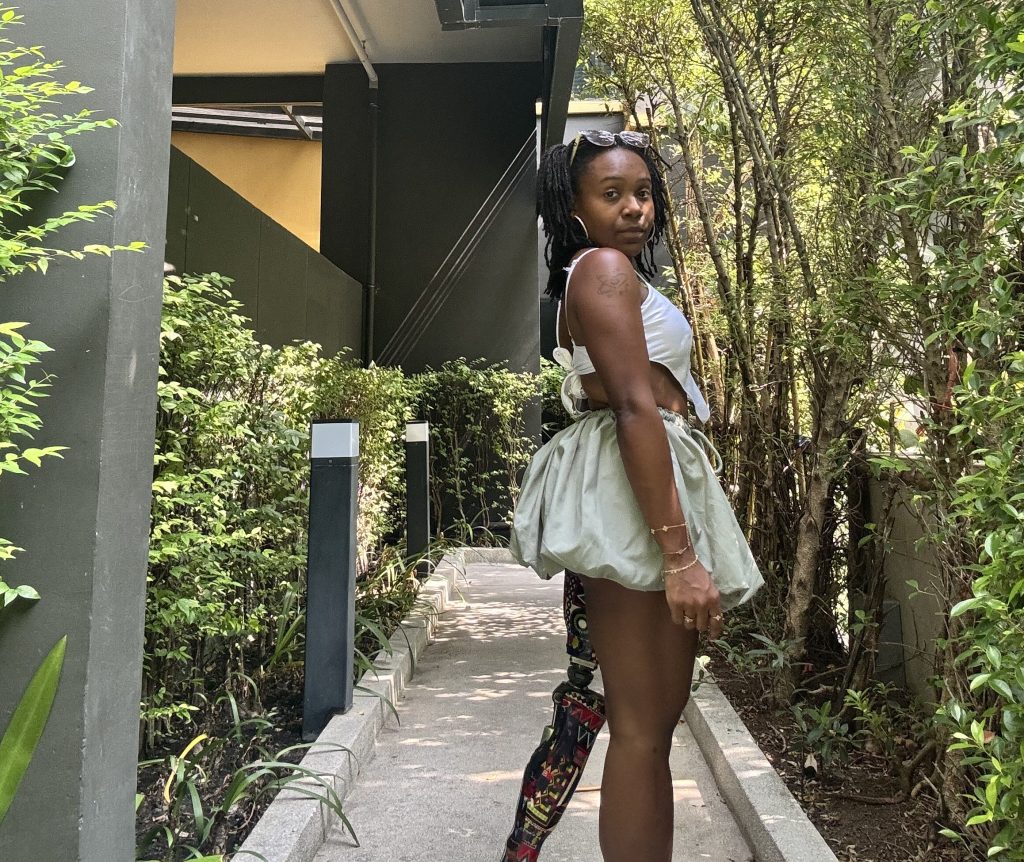
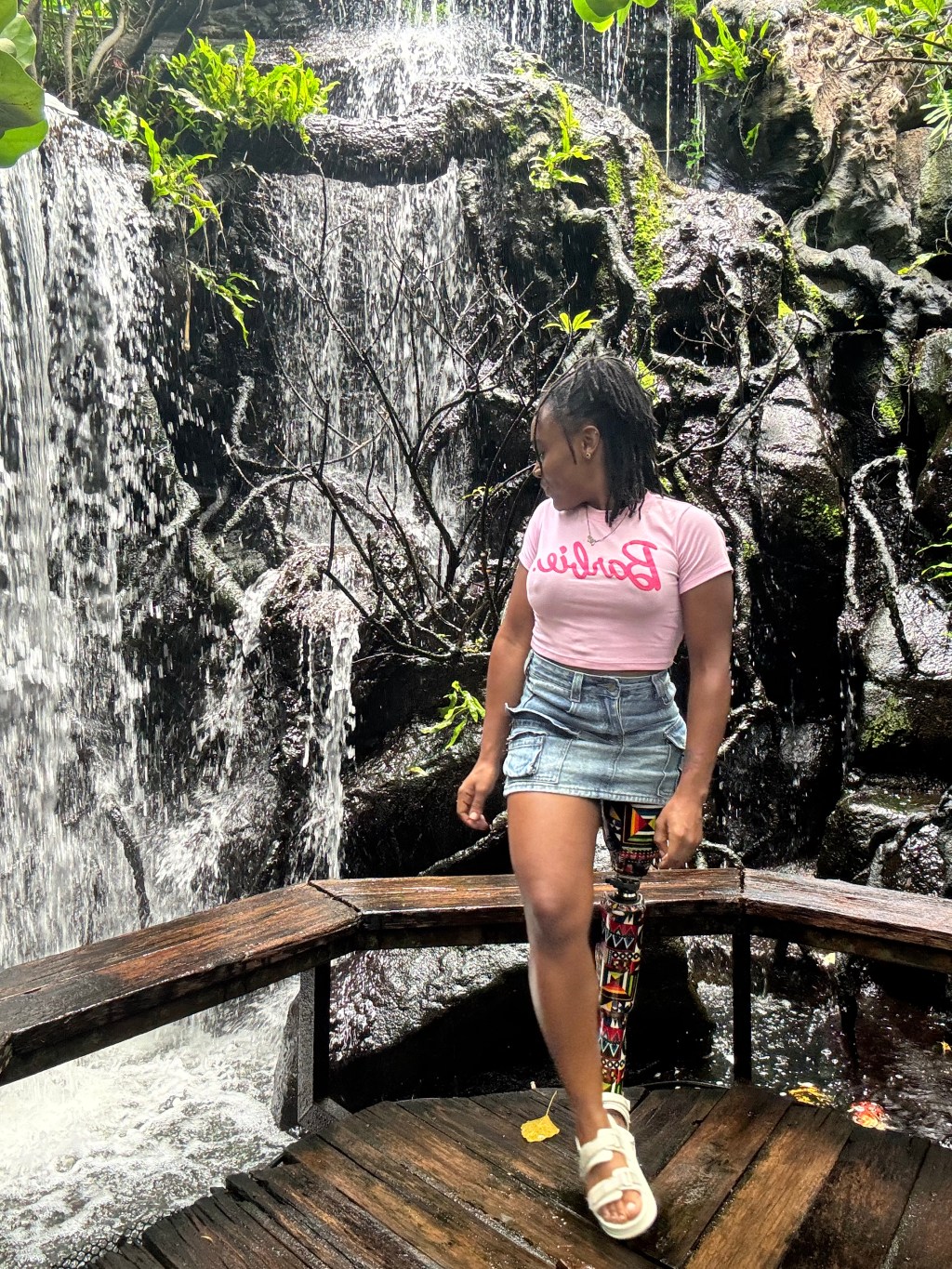
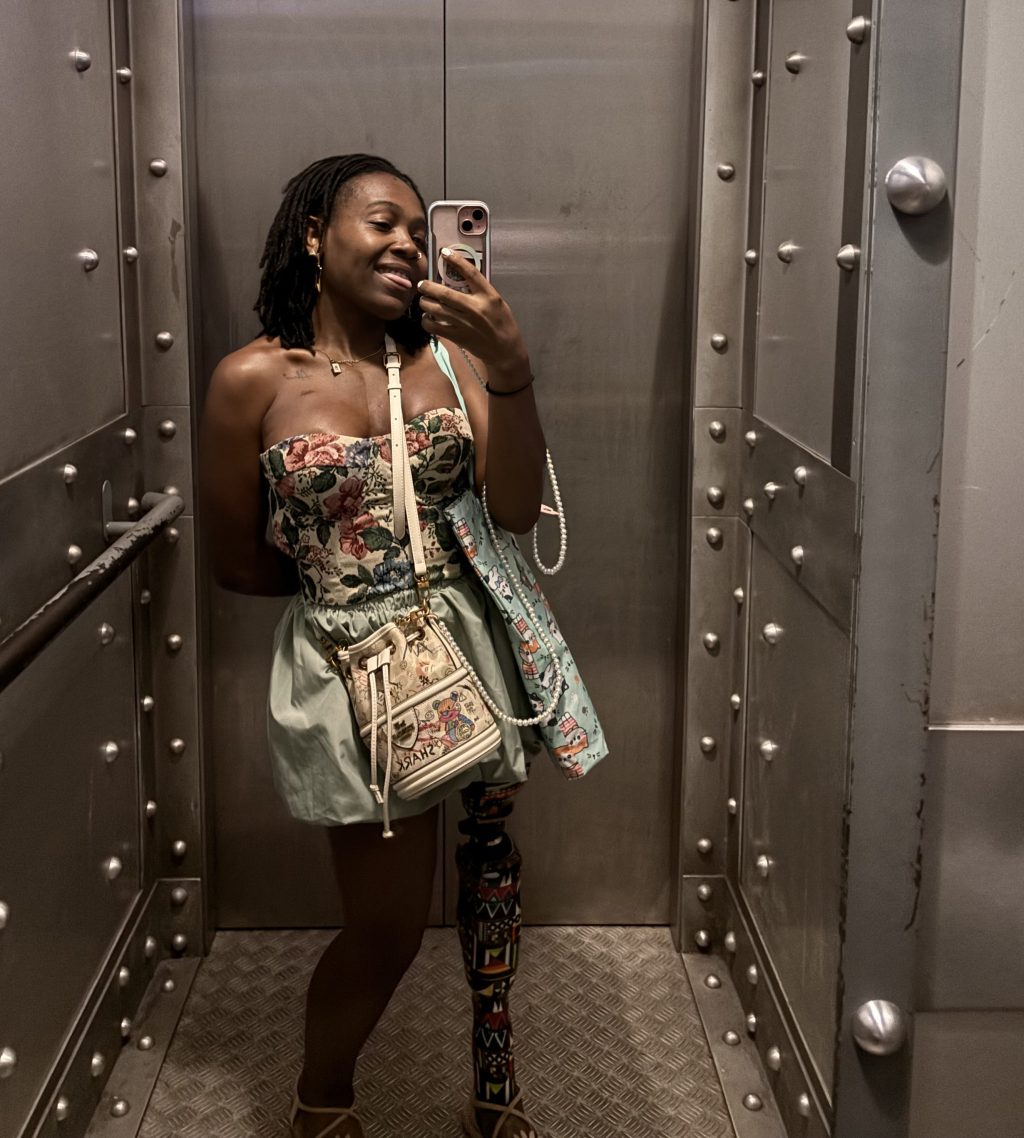
And I do know mine. I know what my limits are when it comes to my kente prosthetic. I may push those limits sometimes, but I know them — and I move accordingly.
I’ll never forget that morning.
We knew the food was going to take over an hour — because… Ghana.
So I ran down to the beach, and one of the girls followed.
Words can’t really describe how beautiful some of Ghana’s beaches are. And this one? Easily one of the best I had seen. Perfectly smooth, soft sand, glistening in the sunlight. So flat that the first kiss between sand and sea was barely visible — but you could still see how fast she moved. Snapping back and forth, in and out of the shoreline.
I was immediately intoxicated.
I walked the beach, watching fishermen bring in their catch, playing with the tide — stepping just close enough where the water would come eye to eye with my feet, but never actually touch. It became a little game, running in and out.
Water is my element. I love it so much.
As I stood there, in my own little world, the girl who came with me asked me to take some pictures of her. I said sure, took a few, then handed her back the phone so I could return to what I was doing. Because I really needed to stay focused — this tide is known for being unpredictable, and it can come in fast. And most importantly, my leg cannot get wet.
After I took a few pictures and gave her phone back, she said:
“Oh Abena, you take nice photos. Please, can you take some more?”
I declined and explained to her, kindly, the importance of me focusing on one thing — the tide — and not her pictures. I told her clearly that my leg cannot get wet.
She responded:
“Oh Abena, don’t worry. It won’t get wet.”
Then? She put the phone right back in my hand.
And this is where I broke Rule 1b:
Advocate for yourself.
I agreed to take two more pictures and tried to pass the phone back.
Miss ma’am refused to take it and asked me to take even more.
Right as I shouted —
“Get your damn phone before I drop it in the water!” —
the tide came in so fast and so high, I immediately felt my left calf soaked in water.
And I knew my prosthetic was too.
Instantly.
“Beep… Beep… Beep…”
To this day, I still hate that sound. When my knee makes it? I get anxiety.
Because my bones remember.
The second I tried to move out of the water and walk? It was over.
The knee had seized.
My prosthetic was dead.
When I tell you I was pissed walking off that beach…
Not just because she didn’t listen.
Not just because she didn’t help me get back to the restaurant.
Not even because she literally walked off — chasing some TikToker — but because never even really apologized. I don’t even think she understood what had happened. And truth be told, that day was the last time I ever heard from her.
When we got back to the restaurant, I spent the whole time on the phone, panicked, trying to figure out what to do. We had all come on this trip together, and leaving early because my leg broke wasn’t the “vibe” of the group.
So I stayed.
We were 1.5 hours outside of Accra. It was our last day. The other ladies wanted to enjoy the beach. I wanted to too — until my leg died.
I spent the rest of the time running around trying to find an air compressor to blow out any excess water. Spoiler: it didn’t help.
By the time I got back to Accra, her little “beach photos” had cost me a last-minute $1,500 flight to Chicago to get a new knee. It was, according to the techs, “severely damaged.”
And since it was also out of warranty? That meant I had to sit through three months of insurance approvals before I could get a new one.
This was one of the hardest lessons I’ve learned while traveling with a disability.
I may not be on any medication, or need prescriptions, or even wear contacts. But I do rely heavily on my device to live the mobile, independent life I lead.
And no — last-minute flights for disability reasons are not a tax write-off.
They’re just extremely expensive and deeply inconvenient.
Zero stars.
I do not recommend.
In total, her ignorance and my lack of self-advocacy cost me nearly $3K.
And I was not prepared — physically, financially, or emotionally. I was down bad for months.
But you know what?
Because I followed Rule 1a — Know your disability, I was able to pivot.
Before I even moved to Ghana, I had a conversation with my prosthetist (shoutout to Jason in Chicago 🙏🏽). We planned safeguards. And thankfully, I brought a backup leg — not as fancy as my kente one, but enough to let me walk.
Real Talk: Travel with a Disability Requires Strategy
That’s what knowing your disability looks like when you travel.
It means not only identifying your needs, but making sure you know how to protect yourself in case of an emergency.
Here are a few tips, no matter how far you’re going:
1a. Know your disability.
1b. Advocate for yourself.
You knew this was coming.
2. Make sure your destination can support your needs.
Venice is one place I’ll never go. As much as I’d love to explore a sinking city (hello, water), I can’t risk slipping, dipping my foot in, and hearing…
“Beep… Beep… Beep…”
And y’all already know how I feel about those beeps.
3. Always have a backup plan.
Going somewhere with cobblestone streets and you’re a wheelchair user? What’s your workaround?
Does your destination have frequent power outages, and you need refrigerated meds? Do you have a portable cooler or backup ice packs?
Wear contacts? Did you bring backup glasses?
Call ahead. Ask questions. You’d be surprised what’s available.
I can’t stress enough how important it is to cover your bases when traveling with a disability — especially if you’re going solo, or planning long-term travel. The access, comfort, and convenience you’re used to at home? That’s going to look very different abroad.
This is your life. Your health.
And as much as I believe everyone should travel and see the world, it’s even more important to create the safeguards that let you actually enjoy it.
This is the foundation of the traveling lifestyle with a disability.
Traveling isn’t impossible for people with disabilities — we just have to take the proper steps to ensure we can truly live our best lives. You can go anywhere you want in the world — as long as you’ve got this part on lock.





 Authentically Christine
Leave a comment