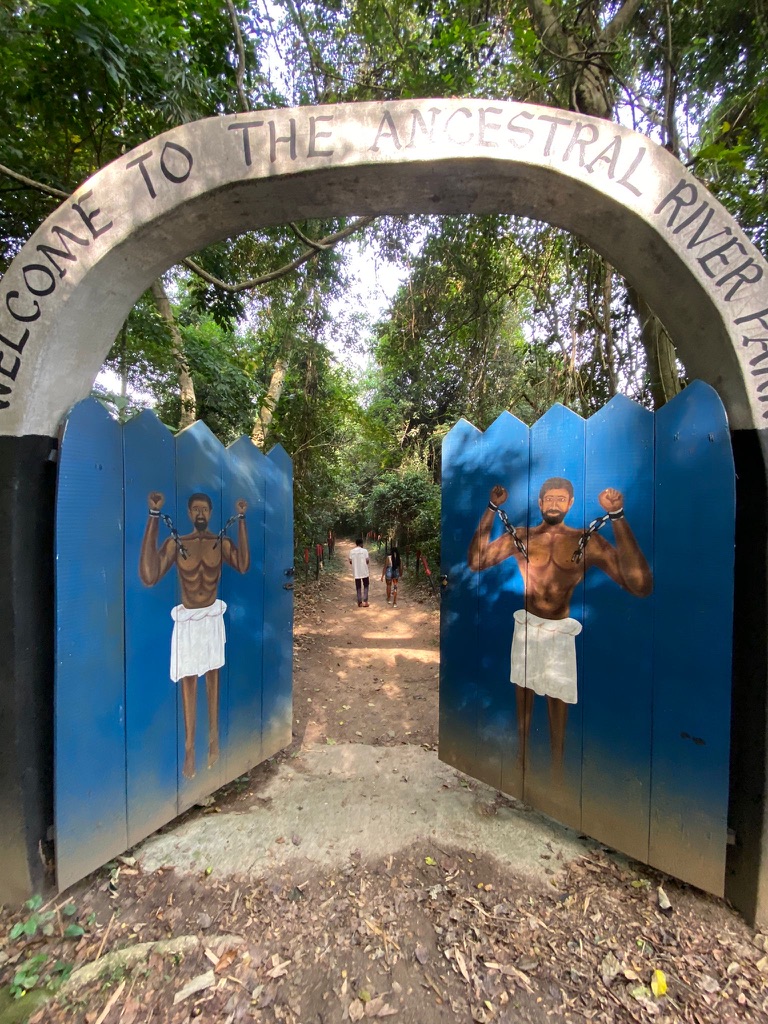
The second question people often ask me when they meet me is, “What made you decide to move to Ghana?” This question I don’t mind nearly as much as the first one.
Truth is, I’ve always been drawn to the continent of Africa, for as long as I can remember. I’ve always had a fascination with the people and their struggles, and I’ve been curious about my own connection to them. My dream was always to go, bury my toes in the earth, and reconnect with the soil that was stolen from me. I’m happy to say I’ve achieved that dream.
Around 2018/19, I began doing a lot of research about the history of the world—before colonialism, even before the first dynasty. While I’m not a history buff, I do have a fascination with the truth of the world. There are so many megalithic structures around the world, yet the true story of our past remains hidden. It’s well-known (I hope) that a lot of the world’s history has been “white-washed,” and we—Black and Brown people—have been lied to about the true history of the world.
While I’ve always known this truth, my first real confirmation came from a photo I saw online, one of Queen Elizabeth bowing down to African royalty. I’m ashamed to admit it, but this was my first introduction to seeing a white person in power submit to someone of color—especially a Black person. As a child growing up in America, I was never taught this truth. That image pushed me down a rabbit hole that led me to uncover many more truths. I’ll spare you the details of my spiral, but here’s the conclusion: I am a Pan-Africanist. I moved to Ghana because I fell in love with my stolen birthplace, and I truly believe that the Black/African community must be united on all fronts.
In truth, I fell out of love with America after learning about the story of its birth, and I fell even deeper in love with Africa, her stolen identity, and the truths that were hidden from me. When I visited Ghana in 2021, it felt like a plug going into its socket—like something was missing and I was finally reconnected. When I left five weeks later, I fell into a deep depression. Suddenly, everything in my life began to turn upside down. It felt as though I was being pushed out of my life in America, and everything seemed to be guiding me in that direction. When I finally returned to Ghana 10 months later, it felt like I was back where I belonged. Finally, everything was right again.
I have spent the last few years learning not just about Ghana, but about myself. I’ve fallen even more deeply in love with this country, even with its frustrations. Ghana y3 mie fi3 (Ghana is my home), and I have no intention of living anywhere else in the world. Ghana has been one of the biggest educators of my life; it has taught me more about the world, and it has challenged and changed me in every way. My time in Ghana hasn’t been perfect—I’ve stumbled a few times—but I’ve learned from those mistakes and become a better person, and in a better place because of them.
I see my life in Ghana, with my tiny home and my garden, maintaining my peace and enjoying “my retirement.” Ghana is beautiful, and her people are kind. I believe not only in Ghana but also in Africa as a whole. I pray that her story is never forgotten, and that her truths are revealed.
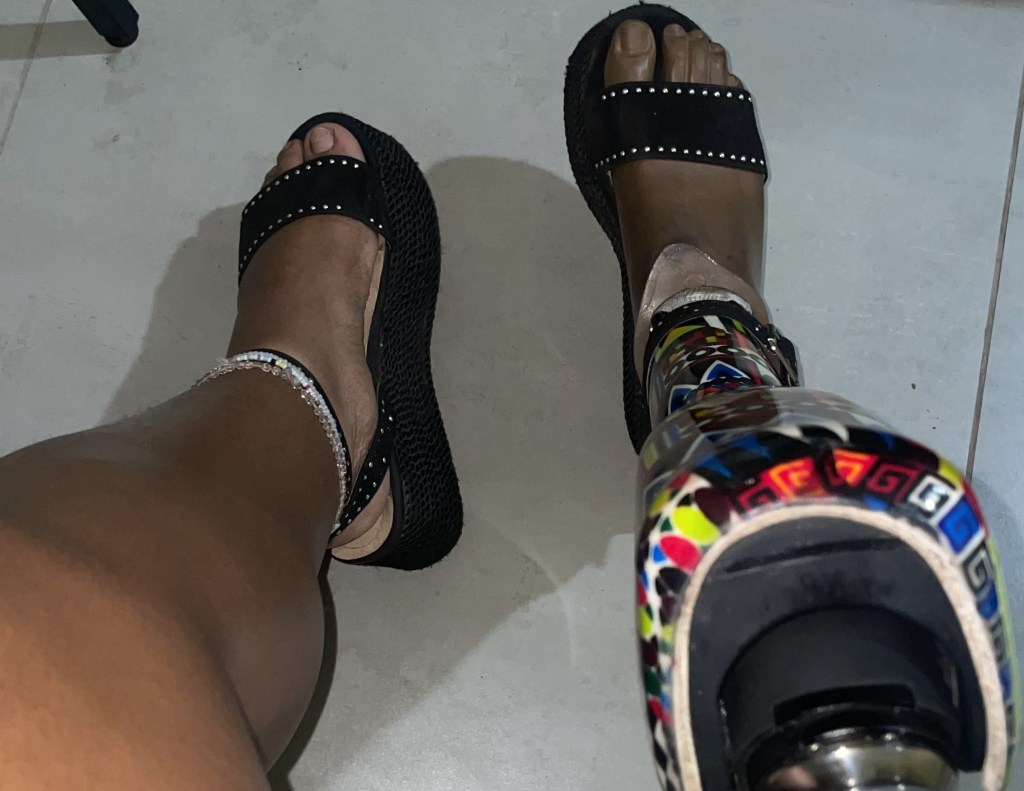
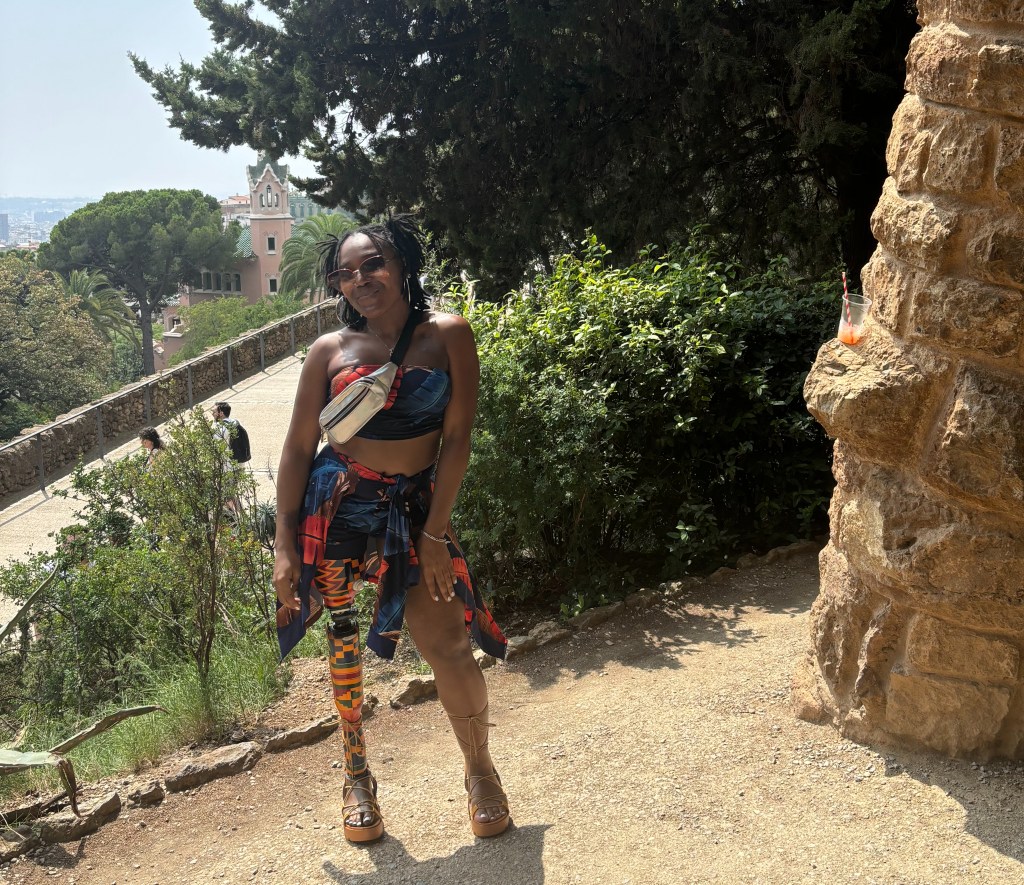
The cover of my prosthetic is made of Kente, the fabric of Ghana, and it is one of the things they held onto after their independence from British colonialism in 1957. It’s a cloth worn by kings and queens, and others high in society, during special and important events and ceremonies. Before 2020, you couldn’t find a single photo of me in shorts, and if you did, I was wearing a brown cover-up, doing my best to hide it. In fact, you won’t find many full-body photos of me at all. I was ashamed and uncomfortable with my leg, and I tried my best to “blend in.” [Story for another day.]
After learning everything I did, right before my first trip to Ghana, I finally gained the confidence to stop hiding and live in my truth. I chose Kente because I wanted to not only represent the story of Africa but also show my love for all the people of Africa—both indigenous and those within the diaspora. I stand with them, and by them. It’s the flag I represent.
Ghana feels right, and while I haven’t visited other countries on the Motherland, I do intend to see and learn more about her. As long as there is air in my lungs and blood in my veins, I will always love and live in Africa.
“For years, Africa has been the footstool of colonialism and imperialism, exploitation and degradation. … Those days are gone and gone forever, and now I, an African, stand before this august Assembly of the United Nations and speak with a voice of peace and freedom, proclaiming to the world the
dawn of a new era … There are now 22 of us and there are yet more to come.”
Kwame Nkrumah, President of Ghana, 1960, the year 16 African countries joined the UN
There is an African proverb that says, “Until the lion tells the story, the hunter will always be the hero.” It is our responsibility to share stories about Black History.


 Authentically Christine
Leave a comment