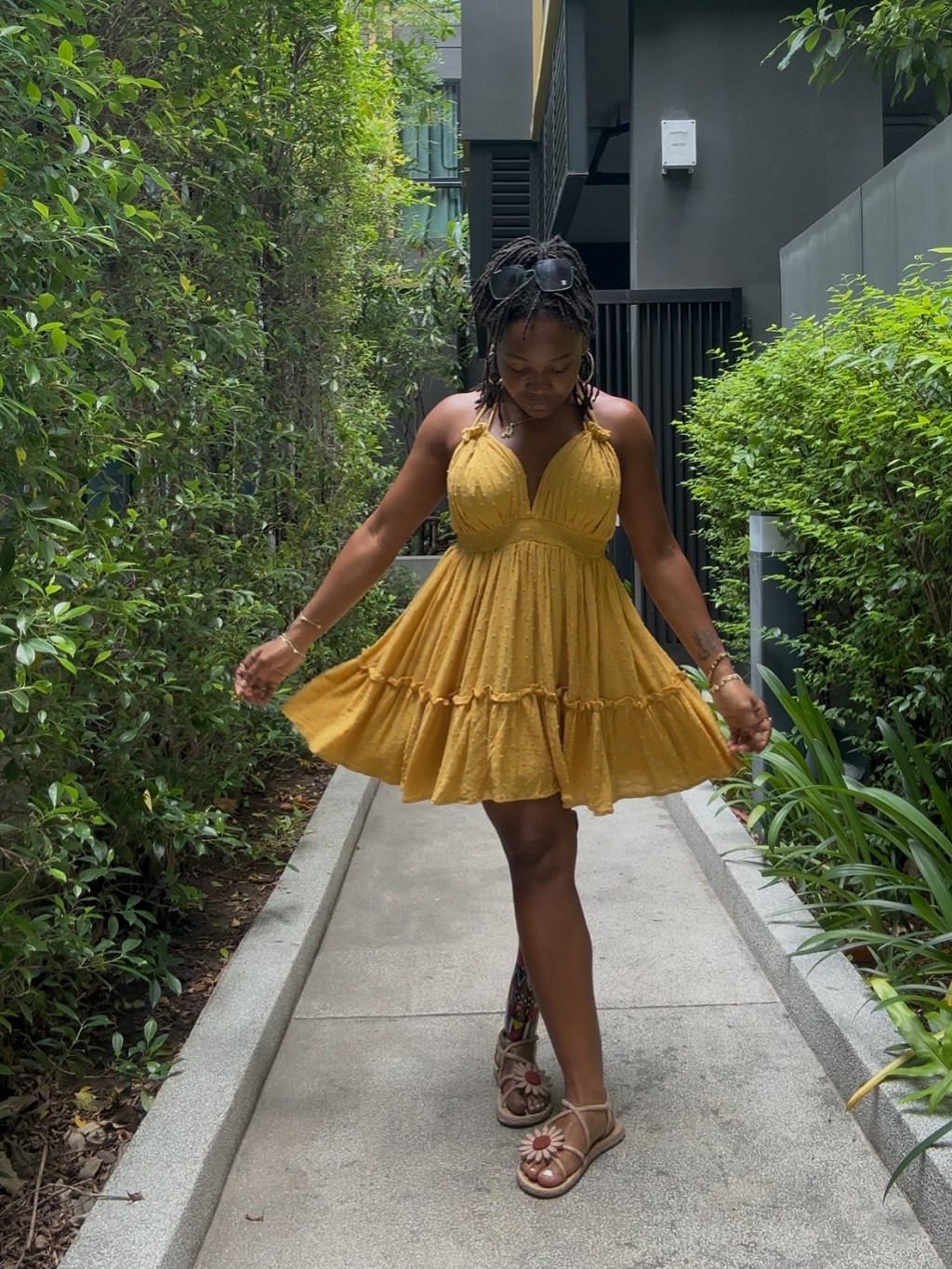
Sometimes, traveling with a disability feels like a lose-lose situation. Damned if you do, damned if you don’t. A lot of things aren’t an “easy fix,” but the pivot is usually worth the stress and hassle.
Lately, I’ve been battling with my weight. Annoying, right? I know so many women can relate. But with certain disabilities, even small changes in weight can seriously impact how our bodies function. I’m definitely no exception.
Anytime I talk about weight, people give me that confused look. “What do you mean? You’re tiny.” What they don’t see is how even a couple of extra pounds can change how I walk, how I move, or whether I can wear my leg properly.
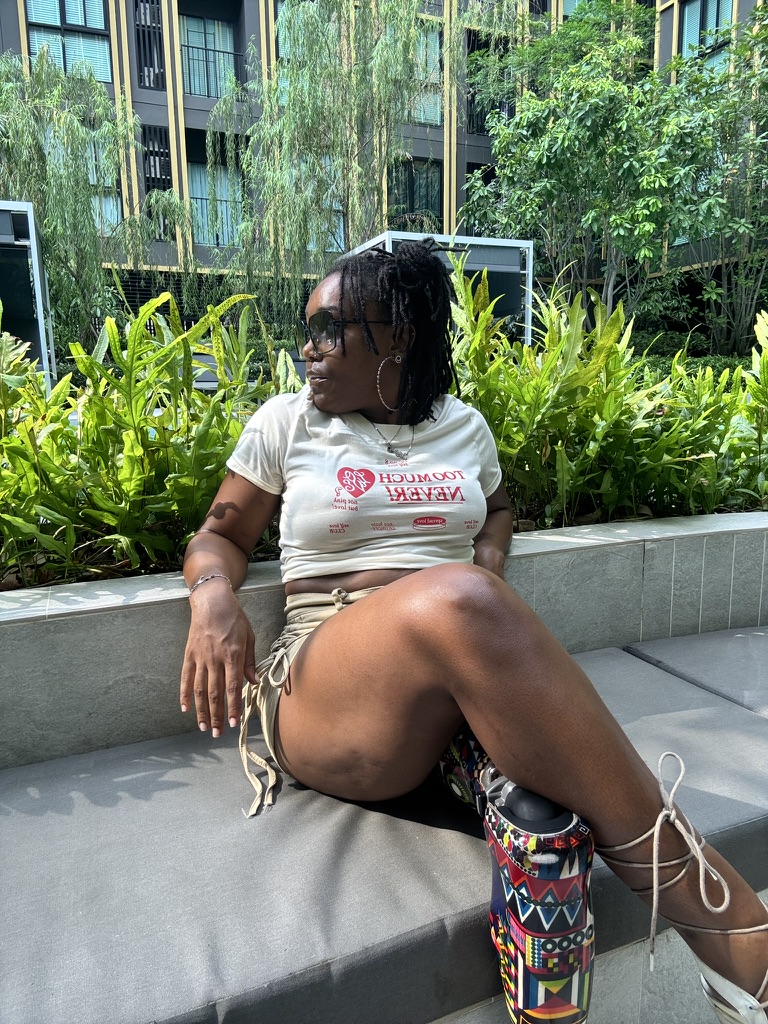
Yes, I’m relatively small. But I’m also a woman of African descent. Hips and thighs? Absolutely. It runs in the family. And while that’s beautiful, it can sometimes feel like a curse when it interferes with how my prosthetic fits.
Right now, I’m in Chiang Mai, Thailand, enjoying a little break after spending time in the hustle of Bangkok. But over the past few weeks, I’ve been dealing with some socket issues. For those who don’t know, the socket is the part of the prosthetic that fits around your limb—and when it doesn’t fit right, everything is harder.
For the last year or two, I’ve been stuck in this cycle. Some days the socket fits like a glove. Other days, it’s so tight I can barely bear it. That’s why I always travel with a backup leg, an older, looser socket, for the days when things just don’t work.
When my socket is too tight, it feels like a snake is wrapped around my thigh. Sitting hurts. Standing hurts. Everything becomes difficult. I’ve been trying to manage it by adjusting my eating habits, hoping to stabilize my weight, because the difference in fit from one day to the next can be extreme.
Just before this trip, I was using my backup socket, and it was so loose I was literally slipping out of it. That told me it was time to switch back to the smaller one. I listened to my body, made the switch, got on my flight to Chiang Mai—and the second I landed, the small one was too tight.
It turns out this wasn’t a weight issue at all. It was fluid retention. Just another unexpected surprise in the world of disability. And of course, my larger socket was sitting comfortably in Bangkok, a whole hour away by plane, while I am only in Chiang Mai for a few days.
So what do you do when your leg won’t cooperate, and you’re trying to enjoy your trip?
You pivot.
You walk without your liner for two hours.
I wasn’t about to let my disability ruin this trip. That’s just not who I am. My original plan was simple: visit a temple, check out a museum, explore the night market. But the second I arrived at the temple, the pain in my leg made it impossible to enjoy. I had to go back to my room.
Still, I wasn’t going to let that be the end of the day. I’ve always made it a point not to let anything stop me—not even my own body. There’s a point where we all draw the line, where we say, “I’m not staying in bed all day”, all because my leg is swollen from a flight.”
So I took off my liner, stuffed some bandanas into the socket to soften the pressure, and caught a ride to the nearby Folklore Museum. Afterward, I treated myself to a big bowl of Khao Soi. It wasn’t the full adventure I had planned, but it was still a good day.
And afterwards, once the swelling went down a bit, I still got to hit the town and enjoy the night market.
To be clear, walking without a liner isn’t recommended by any prosthetist. But I knew my body. I’ve done it around the house before. This was just the first time I pushed it for hours. And I made it work.
I’m really proud of my body. It goes through a lot for me. And I have to give a shoutout to my Linx system by Blatchford—it came through with the flexibility and support I needed.
Traveling with a disability sometimes means changing the plan. Sometimes it means pain. Sometimes it means choosing between rest and experience. But the truth is, only you know what your body can handle. For me, sometimes the back pain is worth the memory.
At one point, I considered ending the trip early. But instead, I asked myself, “What can I still do?” Yesterday, it was museum walks without a liner. Today, it’s a low-key cooking class and maybe a Muay Thai show. The plan changes, but the trip continues.
Yes, I had to pivot. But I didn’t quit. Quitting isn’t adjusting—it’s disappointment. And that’s not the story I want to tell.
When I look back on my time in Chiang Mai, I won’t remember being stuck in my room. I’ll remember figuring it out. I’ll remember walking around for two hours on a bare socket and still having a day that was mine.
Sometimes, you trade comfort for experience. And I’m okay with that. My back might be sore, but my spirit feels good.
There was a time, years ago, when I would’ve let this trip fall apart. I would’ve cried. I would’ve called my family and friends, telling them how my leg ruined everything. But that’s not who I am anymore.
Today, I’m writing this instead—telling the story of how Im pushing through, how I made it work, and how I continue to redefine what it means to live and travel with a disability. The world wants to hand us a certain narrative. I’ve decided to write my own.
Someone asked me today, “What do you do?”
I told him, “I’m a world traveler.”
And I don’t just do this disabled.
I live it.



 Authentically Christine
Leave a comment